
Read Shirley's story
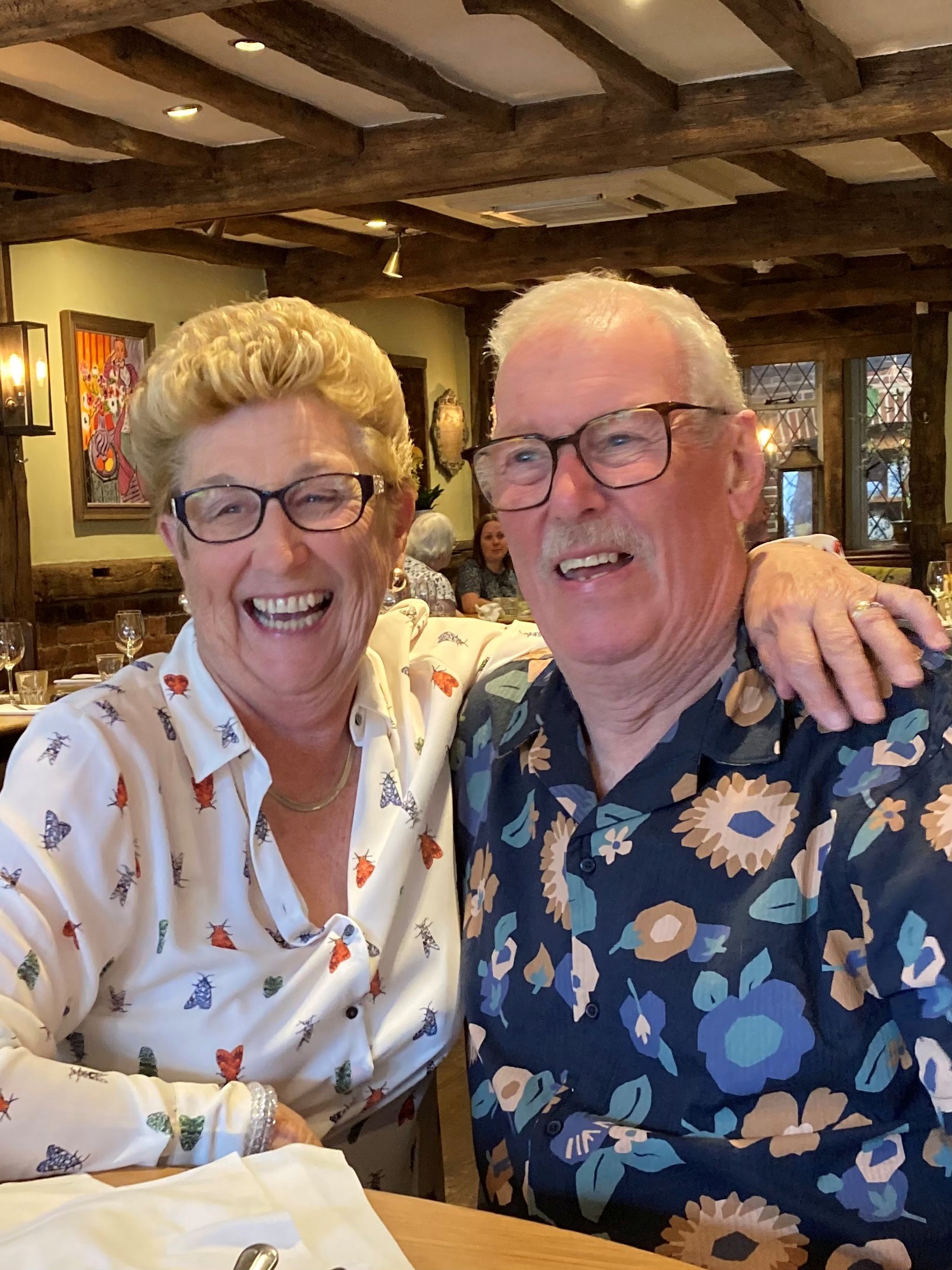
Meet Shirley…
Shirley West has lived in Guildford all her life. At 80, she is still an incredibly active member of her community, from volunteering with a number of charities, to judging the Guildford in Bloom schools competition. But behind her busy life, Shirley is also a devoted carer to her husband Brian, who lives with early onset dementia and prostate cancer.
Like many carers, Shirley didn’t immediately recognise herself as one. It was only as Brian’s mobility and memory declined that she realised how much her role had changed. Caring brought huge emotional and practical challenges, and Shirley found herself facing growing responsibilities, reduced independence and increasing worry about the future.
A friend encouraged her to contact Action for Carers Surrey – a conversation that Shirley describes as “opening a door”. Through our benefits advice, emotional support and help securing a Blue Badge, Shirley and Brian have been able to regain confidence, reduce stress and continue enjoying life together.
Here, Shirley shares her story…
Can you tell me a little about yourself and who you care for?
I care for Brian, who will be 83 this year. He has always been such an active, hardworking man and a wonderful husband. Over time, we started noticing changes. He was repeating himself, forgetting things and withdrawing from conversations. He was eventually diagnosed with early onset dementia, and he also has prostate cancer which is being managed to keep him as comfortable as possible.
How did you first realise you had become a carer?
 It really sank in when Brian’s prostate cancer began affecting his mobility and confidence. He struggled to walk, had to give up bowls, and slowly lost interest in the things he used to enjoy. My son said to me, “There’s something wrong with Dad”, and that pushed us to go to the GP. After scans and assessments, he was diagnosed with early onset dementia.
Over time, I took on more and more. Brian used to handle our finances but now that’s down to me. I manage his appointments and medication, make sure he’s comfortable and looking smart, and gently encourage him to get out of the house. If I didn’t, he would sit watching TV all day. It took a few years before I fully realised that I’m not just his wife anymore, I’m his carer.
What are the biggest challenges you face as a carer?
Losing my independence has been the hardest part. Our life has changed completely. We can’t do the things we used to love, like dancing at weddings, going on theatre trips, or taking holidays. Brian’s world has become smaller, and sometimes it feels like mine has too.
Family and friends are lovely, but they don’t always see how different things are behind closed doors. We’ve had practical help like rails and a downstairs toilet which makes life easier, but emotionally it’s still a huge adjustment for both of us.
Many carers feel this way, but a lot of us don’t realise we’re carers or know that support exists until things become very difficult.
How did you hear about ACS?
A friend whose husband also has dementia told me about Action for Carers Surrey. Like me, she didn’t think she was entitled to anything, but she encouraged me to get in touch. I contacted Rachel, who came to our home and was absolutely wonderful. She listened, understood what we were going through and told us about the support available and ACS then helped with all the paperwork.
Thanks to their support, we received Attendance Allowance and a Blue Badge. I also went along to an ACS hub at The Hive. I felt slightly embarrassed at first because I knew people there, but the staff made me feel completely at ease. We’ve never asked for help before in our lives, so it meant a lot.
If my friend hadn’t mentioned ACS, I would never have known help was out there. There must be so many others in the same situation.
How easy was it to access our services?
Once I knew about ACS, it was very straightforward. It’s all about awareness. If no one tells you support exists, you don’t know to ask. But once I contacted ACS, everything fell into place and was much easier. ACS also helped me access other organisations I didn’t even know existed, which made a huge difference too.
 What difference has ACS made to your daily life?
It has made a huge difference. Just knowing there’s someone at the end of the phone if I need advice gives me peace of mind. The Attendance Allowance helps us keep life comfortable for Brian and makes getting out and about easier. The Blue Badge has transformed our lives. Parking was such a struggle before. Now we feel able to go out again without worrying, which gives Brian and I so much more confidence.
How has the support affected your wellbeing, confidence, or ability to continue caring?
It’s given me strength. I feel like I’m not doing this alone. Knowing that ACS is here now and will be here in the future makes everything less overwhelming. It’s made day‑to‑day caring more manageable.
Without this support, things would have become much harder much sooner. It helped us stay steady and avoid reaching a crisis point.
Is there anything ACS has helped you achieve that you don’t think you could have managed on your own?
I would never have asked for help on my own. I felt embarrassed and didn’t think I had the right to ask. Speaking to ACS felt like a door opening. You made me feel accepted and able to get the support Brian and I needed. Their support has helped Brian stay independent for longer, and it’s helped me stay well enough to continue caring for him.
Has ACS helped reduce stress, worry or isolation? If so, how?
Yes, absolutely. The support from ACS and what it’s allowed us to access has made an enormous difference to our confidence. We can go out without stress, which means we’re not isolated. And I feel less anxious because I feel more prepared and supported. Being able to get out again keeps us part of our community, which makes such a difference to both our wellbeing.
If you had not received this support, what do you think would have happened?
I’d have been sinking. The Blue Badge, financial support and emotional support from ACS have changed everything. Without them, life would be much harder and far more stressful. I’m incredibly grateful.
What would you say to another carer who is unsure about reaching out to ACS for support or advice?
Talk. Don’t be embarrassed. Explain what you’re going through and you’ll realise you’re not alone. Speak to ACS. If you don’t ask, you’ll never know what help is out there.
And you deserve support just as much as anyone else. Don’t wait until you’re at breaking point. If my story encourages even one person to reach out, it’s worth sharing. ACS really is a lifeline for families like ours. I hope more carers feel able to ask for the help they deserve.
Shirley’s story reflects the experience of so many carers across Surrey who take on vital caring roles, often without recognising the support available to them. With early help, the right advice and a friendly voice at the end of the phone, caring becomes more manageable and families can stay connected, confident and supported.
If you’re caring for someone, or you know someone who is, Action for Carers Surrey is here to help.
If you’d like to find out more or get some support, you can call us on 0303 040 1234, or email [email protected]